


Vacqueyras Jaboulet-Isnard 1990


We take the quality of our wines very seriously, which is why all wines are reviewed when they arrive at our warehouse.
Quality check
We perform quality checks on all wines, examining the label, cork and seal, as well as the condition of the wine. This way we create the best conditions for the wine to still be good and drinkable.
Authenticity test
We work with skilled and trustworthy suppliers, and we perform authenticity tests on the wines when they arrive at our warehouse. Here we review the seal, label, bottle number and much more, so that we ensure that the wine is genuine.
We take our guide and service very seriously. When you order wine from us, you will receive a QR code with a link to everything you need to know about treating older wines. You can read more right here .
We select the wines based on strict quality requirements.
The wines must be from quality producers, stored according to all the rules of the art, and pass our final quality assurance when the wine arrives at our warehouse.
This ensures that we can offer a unique product where the probability of a unique experience is very good.
Read more about what to expect
Delivery: We ship orders every weekday.
Delivery time and price:
- Denmark: 1-2 days (39-49 DKK)
- Sweden: 2-3 days (150 SEK)
- Finland: 2-3 days (15 EUR)
- Germany: 2-3 days (15 EUR)
- Netherlands: 2-4 days (15 EUR)
- Generally for EU countries: 2-5 days (15-25 EUR)
NOTE: There may be 1-2 days longer delivery time in remote areas.
Returns: You always have a 30-day right of return.
NOTE : All orders from November 15th to December 24th can be returned until January 31st.
Vacqueyras Jaboulet-Isnard 1990
The 1990 Vacqueyras from Jaboulet-Isnard is a red wine originating from the Rhône Valley in southeastern France, a region where viticulture dates back to Roman times. The wine is produced under the Appellation Vacqueyras Contrôlée classification and was bottled by Maison Jaboulet-Isnard, operating as a négociant éleveur. The label bears the crest text "Tinti Arma Urbis" and the wine has an alcohol volume of 13 percent.
Vacqueyras is a communal AOC located in the southern part of the Rhône Valley within the Vaucluse department, situated at the foot of the Dentelles de Montmirail mountains immediately south of Gigondas. The 1990 vintage marks a significant milestone for the area, as this was the exact year Vacqueyras was granted its official AOC status, becoming the second Cru village in the southern Rhône. The appellation covers approximately 1,500 hectares of planted vineyards.
The climate in this southern sector is distinctly Mediterranean, characterized by warm, dry summers and mild winters. The vineyards are heavily influenced by the Mistral wind, which cleanses the air and keeps the vines dry. The terroir is diverse, ranging from alluvial deposits with large stones, known as galets roulés, on the terraces along the Ouvèze river, to limestone, clay, and sandstone on the higher slopes.
While the northern Rhône is defined by steep slopes and Syrah, the warmer southern Rhône focuses on Grenache-based blends. In Vacqueyras, red wines account for about 95 percent of the total production. These wines are traditionally crafted using a minimum of 50 percent Grenache, supplemented by at least 20 percent Syrah and Mourvèdre, along with smaller quantities of Carignan and Cinsault. The area is widely recognized as a quality-oriented neighbor to Gigondas.
The history of the wine
Below, you can delve into the history of this wine — its producer, grape, area, and region.
Côtes du Rhône
The Rhône Valley in south-eastern France has grown wine since Roman times. The region falls into two parts: the northern section with steep slopes, where Syrah produces deep wines in Côte-Rôtie and Hermitage, and the warmer south, where Grenache-based blends culminate in Châteauneuf-du-Pape. The wines are spicy and powerful with dark berries, pepper and garrigue herbs.
When this wine was made, the world looked very different. Here are some of the stories that unfolded while this bottle quietly aged in its cellar.
You are in safe hands

100% authentic bottles
All bottles undergo a thorough authenticity test by our certified sommeliers before being offered for sale. We reject bottles we are unsure about.

Thorough quality check
Cork, capsule, fill level, label condition, and provenance are individually documented for each bottle. A physical certificate is included with every purchase.

60-day return policy
We are confident in the quality of our wines, and you as a buyer should be too. Return any unopened bottle within 60 days for a full refund — no questions asked.

4.7 on Trustpilot
277 customers have shared their experience. From the first email to the bottle arriving safely – we take pride in making a difference from start to finish.
How it handles
you your wine

Storage
Store the bottle horizontally at 12–14°C and avoid direct sunlight, vibrations, and temperature fluctuations.

Opening
Allow the bottle to stand upright for 24–48 hours before opening to allow sediment to settle. Use a professional corkscrew and open carefully.

Enjoyment
Serve at 17–18°C and be patient – there is a great difference in how and how quickly wines open up when they are aerated.
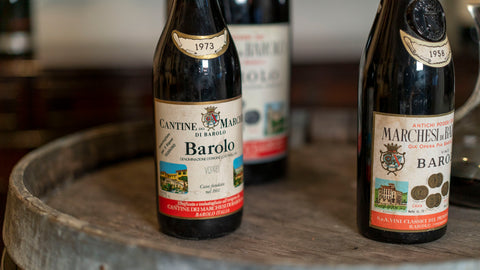
GUIDE TO THE GOOD WINE EXPERIENCE
We will help you throughout the journey. Here you can read our guide on how to treat the wine. If you have any questions, you are always welcome to write or call us.
Our customers say it best!
Based on 247 reviews


